Made Only of Data, Mobile Key by OpenWays is 'Key' to a Greener Earth
There are no keycards greener than the OpenWays Crypto Acoustic Credential
that enables hotel guests to unlock their rooms via mobile phone
Chicago—February
29, 2012—As more and more hoteliers look for ways to
enhance their sustainability programs, "green guestroom access" should
be a priority on the list of things to consider. Over the past few
years, the hospitality industry has
seen a much increased effort at sustainability knowing that people care
about
the environment. "Green" hotels,
green
organizations, green
certification programs, green hotel
school courses and green
industry events have
been developed to make a positive impact on the environment and reduce
the
industry's carbon footprint, each adopting programs for energy
management,
waste management, lighting, water conservation, heating and cooling,
cleaning
and maintenance, air quality, kitchen and laundry, design and even
sales and
marketing. Recyclable keycards and those made of more sustainable
materials are
recent green components introduced for the betterment of the
environment.  Because
traditional plastic or polyvinyl chloride (PVC) keycards are extremely
ecologically
unfriendly, companies have developed ways to replace PVC with wood,
corn
plastic and paperboard materials. While these are definitely
improvements, they
come with their own set of issues. The "greenest" way on the planet
to access a guestroom is with Mobile
Key by OpenWays because it is made only
of data. OpenWays
is the hospitality industry's first front-desk bypass solution that
delivers a
new option for sustainability by dematerializing keys and cards and
replacing
them with an acoustic credential that is sent over the air to any of
the 6
billion mobile phones in the world. Because
traditional plastic or polyvinyl chloride (PVC) keycards are extremely
ecologically
unfriendly, companies have developed ways to replace PVC with wood,
corn
plastic and paperboard materials. While these are definitely
improvements, they
come with their own set of issues. The "greenest" way on the planet
to access a guestroom is with Mobile
Key by OpenWays because it is made only
of data. OpenWays
is the hospitality industry's first front-desk bypass solution that
delivers a
new option for sustainability by dematerializing keys and cards and
replacing
them with an acoustic credential that is sent over the air to any of
the 6
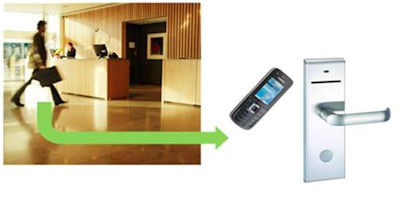
billion mobile phones in the world."Offering the option of Mobile Key enables hotels to make a significant contribution to the environment," said Pascal Metivier, OpenWays Founder and CEO. "We commend those companies leading the effort towards making keycards sustainable, but depending on the material used, there are limitations. Biodegradable keycards, for example, can take 18 months to five years to decompose, and there are concerns with paperboard and wood keycards bending and breaking, especially if they get wet." According to the U.S. Travel Data Center, 43 million U.S. travelers are "ecologically concerned," and as such hoteliers should be doing everything possible to attract this demographic. These consumers – whether traveling for business or leisure -- are especially interested in staying at a hotel that puts the environment first. In fact, Green Lodging News reported that by 2011 approximately 4,271 U.S. hotels have earned some type of "green certification." Jungsun (Sunny) Kim, an assistant professor for the hospitality program at Texas Tech University's College of Human Sciences, and Daniel Connolly, associate dean for undergraduate programs at the University of Denver’s Daniels College of Business, had this to say in a January 2012 article published in Hospitality Technology magazine titled: "How IT Can Go Green": "The focus on sustainability or 'going green' is quickly becoming a major trend. In the world of information technology (IT), the green movement is taking shape. There are numerous opportunities for IT professionals to take leadership roles in helping their organizations adopt sustainable practices. Serving guests through digital signage, smart phones to replace key cards, and e-mail to reduce paper flow are also great ways to conserve resources, save money and have a positive impact on guest service and the overall guest experience." "The benefits of using a mobile key vs. a physical key card of any type are three fold," Connolly said. "First, using a smart phone as the guestroom key provides a great way to re-architect guest service; guests can check in on the go and bypass the front desk to avoid lines and proceed straight to their rooms upon arrival. Second, it's a bona fide way to protect the environment because there are no additional physical materials needed for the room key. Third, it's an excellent way to add more convenience to the overall guest experience. Certainly, it is worth considering this technology when the time comes to replace an existing locking system."  In
another article titled: "Increasing
Number of Suppliers Now
Offering Green Key Cards,"
published by Green
Lodging News, it was reported that a typical 200-room hotel encodes
and
distributes approximately 12,000 plastic keys per year, as desk clerks
typically code two to four keys per check-in. The article reported that
most
hotel guests don't return their cards for reuse or recycling. That
means many
non-biodegradable key cards wind up in landfills each year. Multiplying
this
factor across the landscape of American hotels, more than 1,300 tons of
plastic
become waste each year in the United States alone. In
another article titled: "Increasing
Number of Suppliers Now
Offering Green Key Cards,"
published by Green
Lodging News, it was reported that a typical 200-room hotel encodes
and
distributes approximately 12,000 plastic keys per year, as desk clerks
typically code two to four keys per check-in. The article reported that
most
hotel guests don't return their cards for reuse or recycling. That
means many
non-biodegradable key cards wind up in landfills each year. Multiplying
this
factor across the landscape of American hotels, more than 1,300 tons of
plastic
become waste each year in the United States alone. "Guestroom access has undergone a steady transformation over the past 20 years," Metivier said. "Years ago there was no high tech security like there is today; there were traditional keys for locks and doors. Then came the advent of keycards made with polyvinyl chloride (PVC) that relies on harmful petroleum -- and today these ecologically unfriendly PVC-based cards make up the majority of keys in the marketplace." In addition to the green benefits of Mobile Key by OpenWays, other advantages include:
  OpenWays is a global
solution provider of mobile-based access-management and security
solutions.
With offices in Chicago, Las Vegas, Seoul and in
Europe, OpenWays provides technology solutions allowing for the secure
issuance and delivery of access rights and keys process via any cell
phone
operating on any network. The OpenWays solution is truly unique as it
is built
on the concept of credential dematerialization. The OpenWays mobile
room key
solution works on ALL the
6 billion cell phones in service in the
world today. For more information, please contact Barb Worcester at +1
440
930-5770 or email [email protected].
More information can be found by visiting www.OpenWays.com. OpenWays is a global
solution provider of mobile-based access-management and security
solutions.
With offices in Chicago, Las Vegas, Seoul and in
Europe, OpenWays provides technology solutions allowing for the secure
issuance and delivery of access rights and keys process via any cell
phone
operating on any network. The OpenWays solution is truly unique as it
is built
on the concept of credential dematerialization. The OpenWays mobile
room key
solution works on ALL the
6 billion cell phones in service in the
world today. For more information, please contact Barb Worcester at +1
440
930-5770 or email [email protected].
More information can be found by visiting www.OpenWays.com.
|